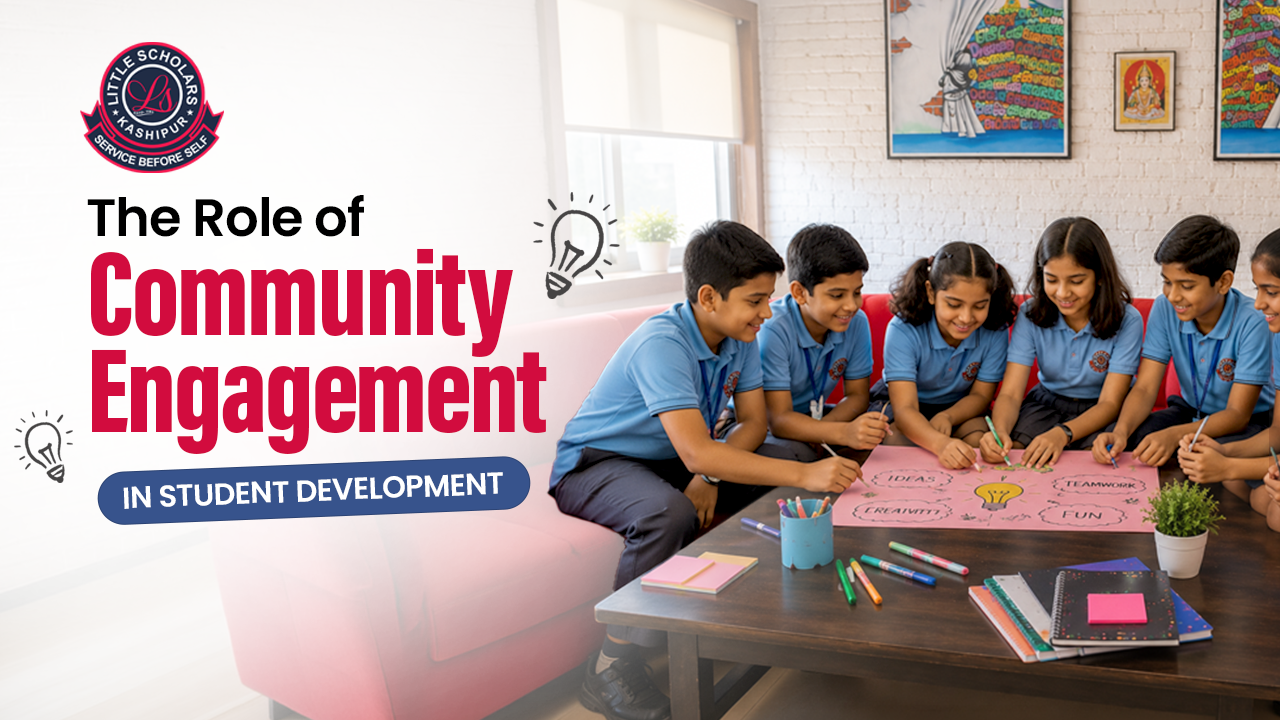
Community engagement plays a vital role in a child’s education and overall development. When parents, teachers, and schools work together, children gain stronger academic, social, and emotional support.
At Little Scholars Kashipur, we believe learning goes beyond the classroom. Community engagement helps students become more confident, responsible, and socially aware.
In this blog, we explore how community engagement helps shape a child’s personality, behaviour, and understanding of the world around them.
What is Community Engagement in Education?
Community engagement connects students with the world beyond the classroom. These experiences encourage children to participate in real-life situations, understand social responsibilities, and interact with different groups of people.
How it supports student growth
1. Builds a sense of belonging
When parents, teachers, and community members participate in school activities, students feel supported and connected. Schools that encourage family involvement through workshops and cultural programs create stronger relationships between students and educators.
2. Improves academic development
When parents remain engaged in their child's education, students receive better guidance, motivation, and support both at school and at home. Children develop better discipline, communication, and learning habits when encouraged by a strong support system.
3. Strengthens social and emotional skills
Participation in group activities teaches students valuable life skills such as teamwork, empathy, and responsibility. Through collaborative projects, students become more confident in communicating with others and solving problems effectively.
Leadership and Teamwork Through Real Experiences
Leadership is best learned through experience. When students participate in organizing events, managing responsibilities, or working on team projects, they naturally develop leadership and decision-making skills.
Community engagement provides opportunities for students to:
-
Improve communication skills
-
Learn teamwork and collaboration
-
Build confidence in decision-making
-
Solve problems in practical situations
-
Understand accountability and responsibility
These experiences prepare students not only for academic success but also for real-world situations in the future.
Why Holistic Education Matters
Today, parents are increasingly looking for schools that go beyond textbooks. They want an environment where their child doesn't just memorise answers, but develops into a capable, well-rounded individual. Holistic education does exactly that — it integrates academic learning with the values, skills, and experiences children need to thrive in a complex world.
Final Takeaways
Community engagement plays an important role in shaping a child’s overall development. Beyond academics, it helps students build confidence, empathy, leadership, and social responsibility.
At Little Scholars Kashipur, one of the best schools in kashipur uttarakhand we believe that meaningful learning happens both inside and outside the classroom. By encouraging students to participate in community activities and collaborative experiences, we aim to prepare them not only for exams, but for life.
FAQs
1. Why is community engagement important for students?
It helps students develop social, emotional, and leadership skills while improving confidence and responsibility.
2. How do schools encourage community involvement?
Through awareness drives, cultural events, social campaigns, group projects, and parent participation programs.
3.Can community activities improve academic performance?
Yes. Students often perform better academically when parents, teachers, and communities actively support their learning.
4. What skills do students learn through community engagement?
Teamwork, communication, empathy, leadership, problem-solving, and responsibility.